Why Safety Nets Are Critical in Construction Work
Why Safety Nets Are Important in Construction Work
Walk past any mid-rise building site in Gujarat and you will notice something: the good contractors have nets up before the second floor is even poured. The sloppy ones add them later, usually after someone has had a scare.
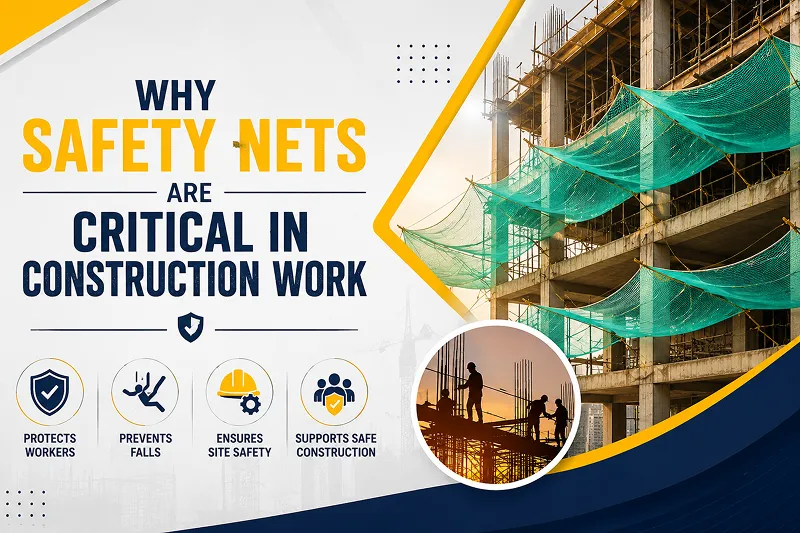
That is the honest starting point for talking about safety nets construction applications — they are not decoration, and they are not a formality for the inspector's clipboard. They are the one thing standing between a fall and a fatality when a worker is thirty feet up with nothing but scaffolding under his boots.
What Actually Happens Without Them
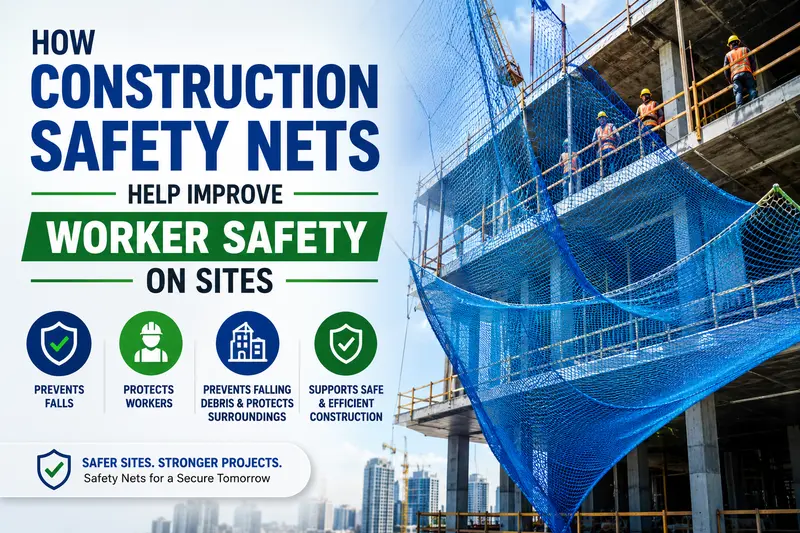
Falls from height account for a huge share of construction site injuries in India, and most of them are not dramatic collapses — they are a missed step, a loose plank, a gust of wind at the wrong moment. A harness helps, but harnesses fail when anchor points are wrong or workers unclip too early to move faster. Nets do not rely on the worker doing everything right. They catch mistakes.
Beyond individual falls, construction sites without proper debris netting pose serious risks to pedestrians, nearby traffic, and workers on lower floors. Falling tools, brick fragments, and mortar offcuts are responsible for a significant share of non-fall construction injuries every year.
The Compliance Angle
Beyond the human cost, most state labour departments and BOCW (Building and Other Construction Workers) regulations now expect documented fall-protection measures on any site above a certain height. Auditors check for it. Insurance claims get contested without it. So there is a paperwork reason to get this right too, even if the safety reason should be enough on its own.
Requirements vary by state and project height, but BOCW regulations generally expect fall-protection measures on multi-storey work. It is worth checking with your local labour department for the specific threshold applicable to your project.
Getting the Right Net for the Job
Different builds need different mesh density, breaking strength, and mounting setups — a residential tower is not rigged the same way as an industrial shed or a bridge retrofit.
Key factors to evaluate when specifying construction nets:
- Mesh size and yarn thickness based on fall height and load
- Border rope rating (typically 12 mm to 14 mm for personnel nets)
- UV stabilisation for long project timelines
- Compliance with IS 11952 or EN 1263-1 as required
- Ease of inspection and batch identification labelling
Majestic Nets manufactures HDPE monofilament netting built specifically for construction site applications, with the UV resistance and tensile strength to hold up through a full project timeline, not just the first few months.
Construction Site Hazard & Net Solution Matrix
| Hazard Category | Site Risk Level | Recommended Net System | Key Engineering Standard |
|---|---|---|---|
| Worker Fall Arrest | Critical (High Elevation) | Personnel Fall Protection Net | IS 11952 / EN 1263-1 (Braided Cord) |
| Falling Tools & Debris | High (Pedestrian & Site Risk) | Scaffold Debris Netting Wrap | 120 to 160 GSM Fine Monofilament |
| Perimeter Boundary Drop | High (Building Edge Risk) | Edge Perimeter Safety Net | 14 mm Border Rope + Anchor Ties |
| Demolition Dust & Wind | Moderate (Environmental) | 50% Porosity Facade Wrap | Wind-dampening breathable weave |
Frequently Asked Questions
Need HDPE nets for this application?
Factory direct pricing, custom sizes and honest specs from our plant in Bhavnagar.
Get a QuoteMajestic Nets Team
Articles from the people who run the extrusion and knitting lines at Majestic Nets Pvt. Ltd.. We write the guides we wish our customers had before buying.